For years, fabric softener was just part of doing the laundry. It went in the drawer, the clothes came out soft, and that was that.
But more and more people have started quietly skipping it, either because of skin irritation, buildup on towels, strange residue, or just because it’s another massive bottle taking up space in the laundry cupboard.
Here’s a fact: fabric softener isn’t the only way to get soft laundry. There are actually alternatives that soften fibres instead of leaving a residue behind.
In this article, I’m focusing only on natural fabric softener alternatives you can introduce to your home. Better for the environment, better for your family’s health, and better on your purse strings!
You might also like:
- Benefits of Wool Dryer Balls (And Do They Even Work?)
- Best Zero Waste Laundry Detergent: 8 Brands To Try Now
- 9 Best Septic Safe Laundry Detergent
NO TIME TO READ NOW? PIN FOR LATER
Disclaimer: This post contains affiliate links. This means that if you purchase anything through a link, I may earn a small commission. As an Amazon Associate, I earn from qualifying sales. This is at no extra cost to you. You can read my full disclaimer here to find out more.
The Goal of Fabric Softeners
Fabric softener works by coating fibres with a thin layer that makes them feel smoother to the touch. This coating reduces friction between fibres, which is why clothes come out feeling softer and less stiff.
That same coating also helps cut down on static and can make ironing easier.
The trade-off is that it doesn’t actually clean or improve the fibres themselves. Over time, that build-up can affect absorbency, especially in towels, and leave clothes feeling coated rather than truly soft.
Understanding this makes it easier to see why some alternatives work better. The goal isn’t to add another layer, but to soften fibres without leaving anything behind.
Fabric Softener Alternatives to Use in the Washing Machines
If you’re replacing fabric softener in the washing machine, you want something that softens fabrics by dealing with residue, hard water, or fibre stiffness, rather than coating clothes with another layer. The alternatives below do exactly that, each in a slightly different way.
White vinegar
White vinegar is the most common alternative to fabric softener, and it’s also one of the simplest to use.
It doesn’t soften clothes by adding anything to them. Instead, it works by clearing away laundry detergent residue and mineral buildup that can make fabrics feel stiff over time. Once that buildup is gone, fibres relax and clothes feel softer again.
To use it, pour about ½ a cup of white vinegar into the fabric softener drawer of your washing machine. This means it’s released during the rinse cycle, which is exactly when you want it. If your machine doesn’t have a softener drawer, you can add it directly to the drum during the rinse.
What about the smell? Don’t worry. Despite the smell in the bottle, vinegar doesn’t actually leave clothes smelling vinegary once they’re dry. It rinses out completely and works particularly well for towels, cotton clothing, and everyday washes.
A quick safety note: vinegar is fine for most fabrics, but I would avoid using it regularly on delicate items like silk or wool, and it shouldn’t be mixed with bleach.
Washing soda
Washing soda is a little stronger than baking soda. It’s generally the resort when clothes feel stiff no matter what you do, or if towels have that slightly crunchy feel even straight out of the dryer.
Washing soda works by softening water and helping detergent rinse more thoroughly from fabrics. When detergent and mineral residue aren’t left behind, fibres can move more freely, which is what gives clothes a softer feel.
To use it, add ¼ to ½ a cup of washing soda to the drum or detergent compartment at the start of the wash. A little goes a long way, so there’s no need to overdo it.
Washing soda is great for sturdy fabrics like towels, bedding, and work clothes. Because it’s quite alkaline, you should avoid using it on delicates, wool, or silk, and it’s a good idea to handle it with dry hands.
Borax
Although you may not have heard of it, borax has been used in laundry for decades, and it sits somewhere between vinegar and washing soda in terms of strength. It helps soften hard water and boosts how well detergent works, reducing the amount of residue left behind on clothes.
To use borax, add ¼ to ½ a cup to the drum or detergent drawer at the start of the wash. It dissolves during the cycle and rinses out with the water.
Borax works well on thicker fabrics like cottons, linens, and towels. As with washing soda, it’s best used on everyday laundry rather than delicate items, and it should be kept out of reach of children and pets.
Fabric Softener Alternatives to Use in the Dryer
What happens in the dryer has a huge impact on how soft clothes feel at the end. When laundry dries clumped together, fibres tighten and fabrics can feel stiff. That’s why dryer-based alternatives work so well. They keep items moving and separated, so air can circulate properly and clothes dry more gently.
Wool dryer balls
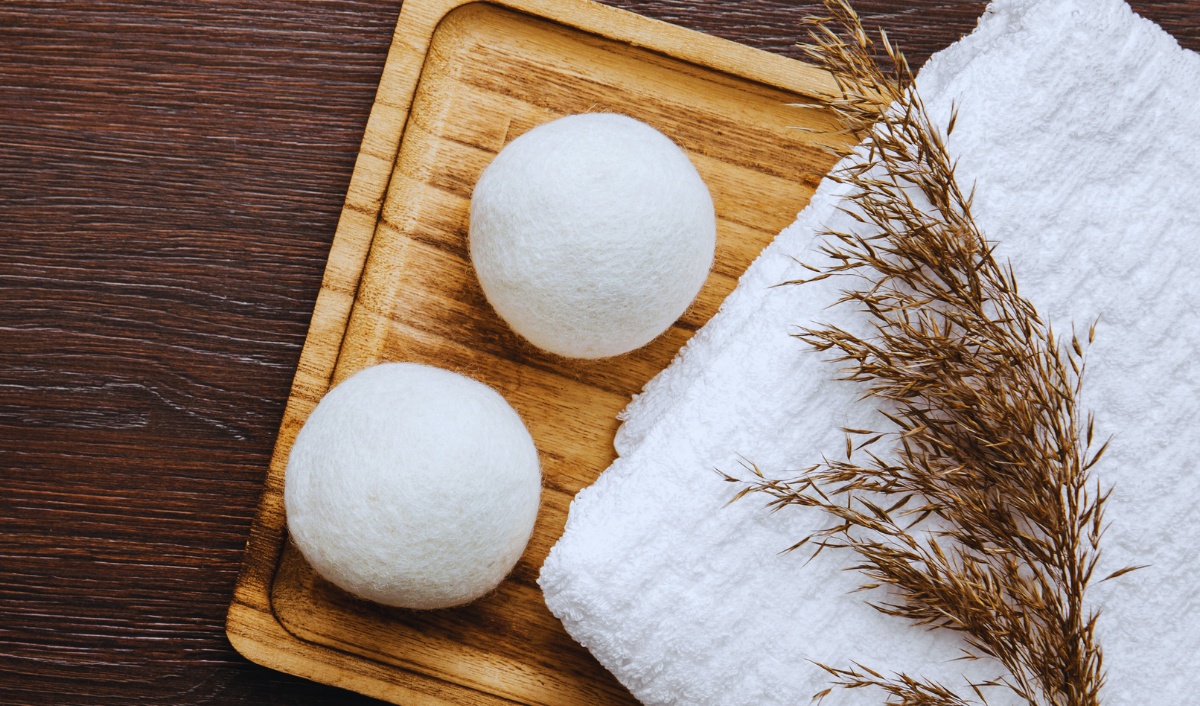
Wool dryer balls are one of the easiest swaps for traditional fabric softener. They’re made from tightly packed wool and move around the drum as the dryer runs.
As they tumble with the laundry, they help separate clothes and stop everything from bunching together. This allows hot air to circulate more evenly, which reduces stiffness and helps fabrics dry with a softer feel.
Read all about the benefits of using wool dryer balls here.
Wool dryer balls are especially good for towels, bedding, and everyday clothes. They don’t leave residue behind and won’t affect absorbency, which is often where traditional fabric softener causes problems.
Want your laundry to smell extra fresh? Add a few drops of organic essential oils to your dryer balls!
Rubber dryer balls
Rubber dryer balls work in much the same way as wool ones, but they’re made from flexible rubber rather than fibre. Their bounce keeps laundry moving and prevents clothes from sticking together as they dry.
This movement reduces stiffness and helps fabrics come out feeling softer. Rubber dryer balls are super durable and tend to hold their shape well over time. They’re particularly useful for heavier loads like towels or hoodies.
Tennis balls
Tennis balls are a more DIY alternative, but they can still be effective, especially for bulky items. They pretty much do the same job as wool or rubber dryer balls.
It’s best to avoid using them with delicate fabrics, as they’re firmer than other dryer balls.
Aluminum foil balls
Aluminium foil balls are exactly what they sound like: small balls made by tightly crumpling kitchen foil! When placed in the dryer, they tumble around with the laundry.
Their purpose isn’t necessarily to coat or soften fabrics, but more to reduce static. As clothes rub together in the dryer, static electricity builds up. The foil helps discharge that static, which can stop clothes clinging together and feeling stiff once dry. And when static is reduced, fabrics tend to cool and settle more naturally, which in turn makes them feel a bit softer.
So get your kitchen foil out and get crumpling!
Fabrics That Benefit Most From Softener Alternatives
Fabric softener alternatives tend to work best on everyday, hardworking fabrics. These are the items that get washed often and are most likely to build up detergent residue over time.
Towels
Towels are probably the biggest winners. Traditional fabric softener coats fibres and reduces absorbency, leaving towels ending up feeling rock hard. Alternatives that remove residue help towels feel softer and work properly again.
Cotton clothing
Cotton responds really well to softener alternatives because it naturally relaxes once residue and mineral buildup are removed. T-shirts, underwear, pyjamas, and everyday basics usually come out feeling softer without any coating or fragrance.
Bed linen
Sheets and pillowcases often feel stiff simply because they’re washed so frequently. Using alternatives that rinse clean helps bedding feel lighter and more comfortable, without that waxy feel fabric softener can leave behind.
Linen fabrics
Linen has a reputation for feeling rough, especially when new. While it will never feel silky, softener alternatives can help it feel more flexible and less rigid over time by preventing buildup on the fibres.
Fabrics to be Cautious With
While most everyday laundry benefits from softener alternatives, there are some fabrics that need a bit more care.
Delicate fabrics
Silk, lace, and fine synthetics can be sensitive to stronger alternatives like washing soda or borax. These are better washed gently, often without any additives beyond a mild detergent.
Wool and cashmere
Natural fibres like wool and cashmere don’t respond well to alkaline products. Vinegar can be used occasionally, but it’s generally safer to wash these items with a wool-specific detergent and skip softening agents altogether.
Technical and performance fabrics
Activewear, waterproof clothing, and moisture-wicking fabrics are designed to perform a specific function. While they don’t need fabric softener, some alternatives can still interfere with performance if overused. A good rinse and minimal detergent is usually enough.
SAVE FOR LATER